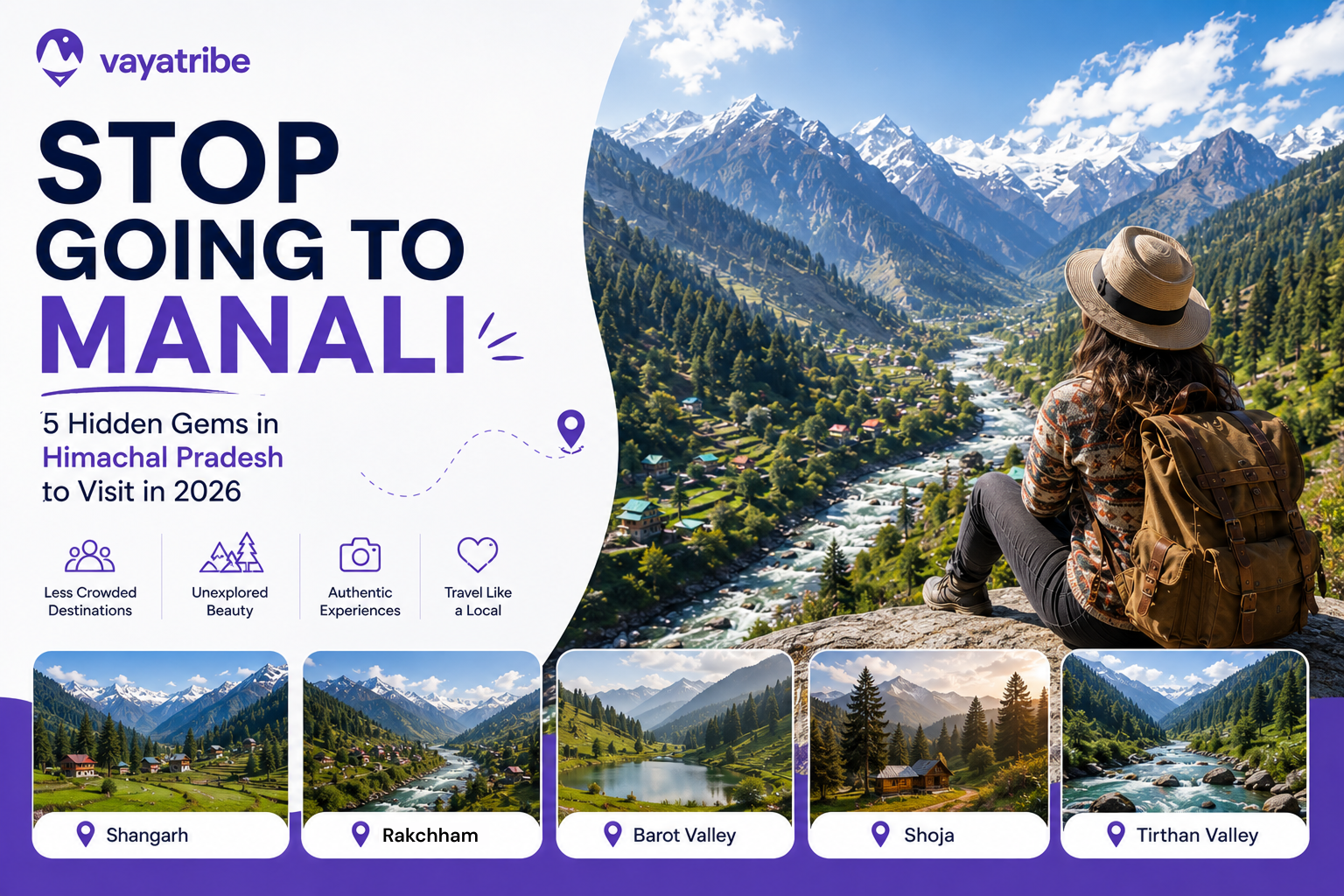
Quick Answer: If you want to escape the 3-hour traffic jams and overcrowded viewpoints of mainstream hill stations, the best hidden gems in Himachal Pradesh for 2026 are Shangarh (for untouched alpine meadows), Barot Valley (for riverside camping and trout fishing), Rakchham (a quiet alternative to Chitkul), Shoja (a secluded forest escape), and Jibhi / Tirthan Valley (the eco-tourism capital). Because these areas are remote, the best way to explore them safely is by hiring a verified local guide through VayaTribe.
We all know the illusion: You pack your bags, dreaming of a quiet wooden cabin, the smell of pine trees, and a peaceful Himalayan morning.
The reality? You arrive in Shimla or Manali only to find yourself stuck in bumper-to-bumper traffic, surrounded by blaring horns, overpriced hotels, and tourists fighting for a selfie spot.
In 2026, mainstream Himachal Pradesh is bursting at the seams. But the real Himalayas—the quiet, deeply spiritual, and breathtakingly beautiful mountains—still exist. You just have to know where to look.
Here are 5 closely guarded secrets and offbeat destinations in Himachal Pradesh where you can actually hear the wind in the trees
Tucked away in the Sainj Valley (part of the Great Himalayan National Park), Shangarh is what Gulmarg used to be 30 years ago. It is defined by a massive, perfectly manicured alpine meadow surrounded by dense deodar forests and snow-capped peaks.
The Vibe: Absolute silence, slow mornings, and wooden temple architecture.
The Secret: There are no noisy markets or luxury resorts here. Shangarh is for the traveler who wants to sit by a meadow, read a book, and watch the clouds roll over the valley.
Chitkul is famous as the “Last Village of India,” but because of that title, it has become incredibly crowded. Just a few kilometers before Chitkul lies Rakchham. Positioned right on the banks of the roaring Baspa River, it is surrounded by pink buckwheat fields in the summer and deep snow in the winter.
The Vibe: Raw, cinematic Kinnaur beauty without the tourist buses.
The Secret: Trekking the glacier trails around Rakchham is dangerous without context. Walking these ancient trade routes with a local Kinnaur guide turns a simple hike into an unforgettable lesson in border-town history.
Originally built around a hydel project in the 1920s, Barot Valley remains entirely off the commercial radar. The Uhl River cuts right through the valley, making it the trout-fishing capital of the state.
The Vibe: Riverside camping, dense wildlife, and thrilling, narrow mountain roads.
The Secret: Across the river lies the Nargu Wildlife Sanctuary, home to the Himalayan black bear. This isn’t a place for casual sightseeing; it’s a place for serious nature lovers.
Most people drive right past Shoja on their way to the treacherous Jalori Pass. Big mistake. This tiny hamlet is buried in dense oak and pine forests.
While Jibhi has become somewhat popular, the wider Tirthan Valley remains fiercely protected by its locals. Commercial mega-hotels are banned here to protect the ecosystem.
| Destination | Best For | The “Must-Do” Experience |
| Shangarh | Digital detox, slow travel | Sunset walks in the grand meadow |
| Rakchham | Cinematic photography | Glacier trekking near the Baspa River |
| Barot Valley | Nature lovers, camping | Catching and cooking Himalayan trout |
| Shoja | Couples, winter snow | Hiking the forested trail to Serolsar Lake |
| Tirthan Valley | Eco-tourism, families | Exploring hidden waterfalls |
There is a reason these places are still hidden: they are remote.
You won’t find large tour agencies operating here, the roads can be tricky, and the weather is unpredictable. Furthermore, because these are small, close-knit villages, wandering through them disrespectfully or without understanding the local culture is frowned upon.
This is where you need a local.
To truly experience these hidden gems safely and authentically, you need someone who knows the terrain, respects the village elders, and knows the hidden trails.
With VayaTribe, you can bypass the big agencies and connect directly with verified, local guides who actually live in these remote valleys.
Safety First: Navigate tricky mountain roads and high-altitude treks with a seasoned expert.
Hidden Access: Visit secret waterfalls and viewpoints that aren’t on any map.
Cultural Respect: Learn the folklore, eat authentic home-cooked meals, and ensure your tourism money supports the local village economy directly.
This year, skip the traffic jams. Head higher, travel slower, and let a local show you the magic of the deep Himalayas.